UX Feature Lead on a B2B SaaS supply chain risk platform — redesigning the homescreen, company profile, and alerts system for enterprise analysts managing global supplier networks.
Interos's legacy platform presented supply chain risk data like an Excel spreadsheet — rows and rows of data points with no narrative, no hierarchy, and no path to action. Users were barraged with information and left to interpret it entirely on their own. For enterprise analysts managing thousands of suppliers across global tiers, this wasn't just frustrating — it was a genuine risk.
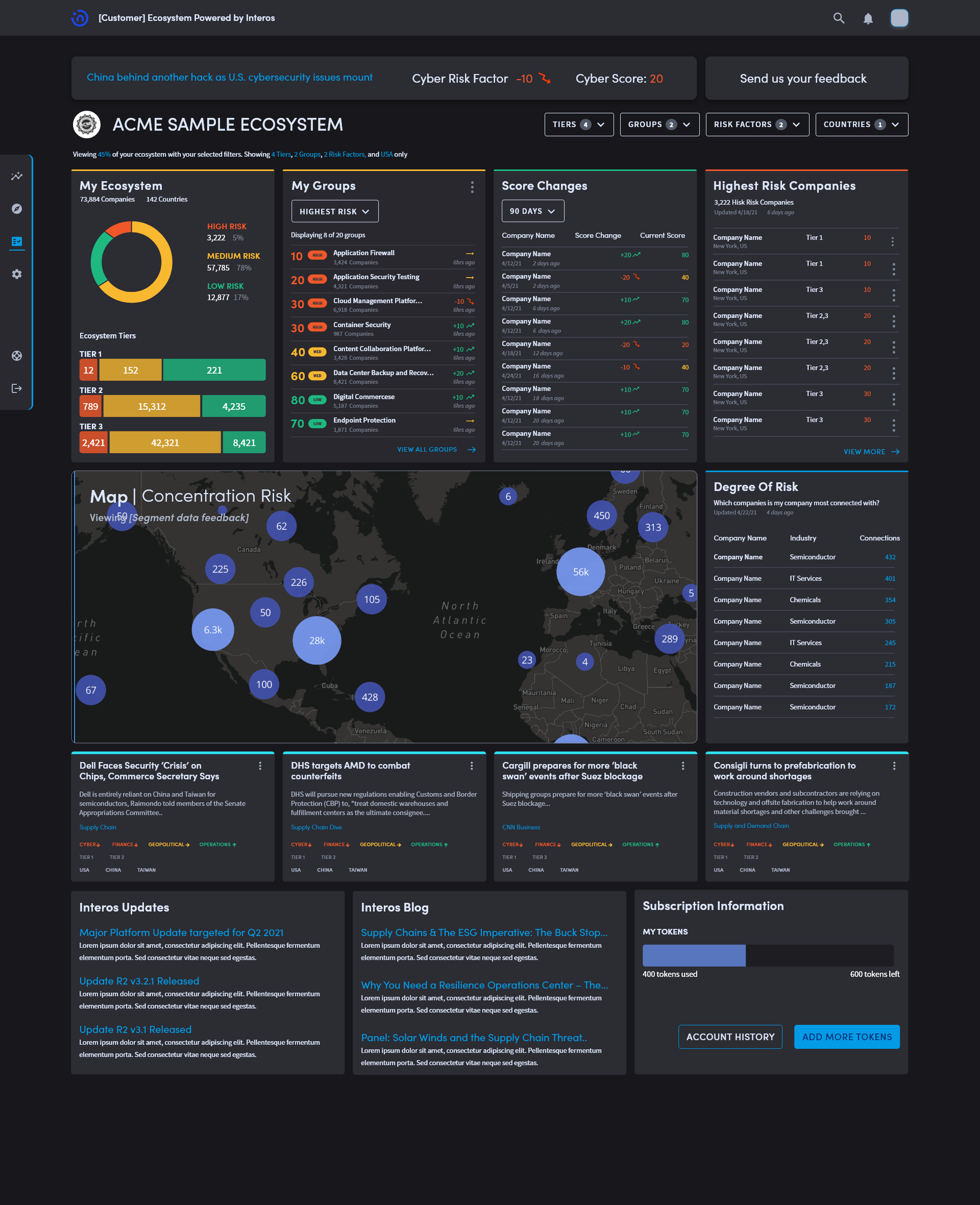
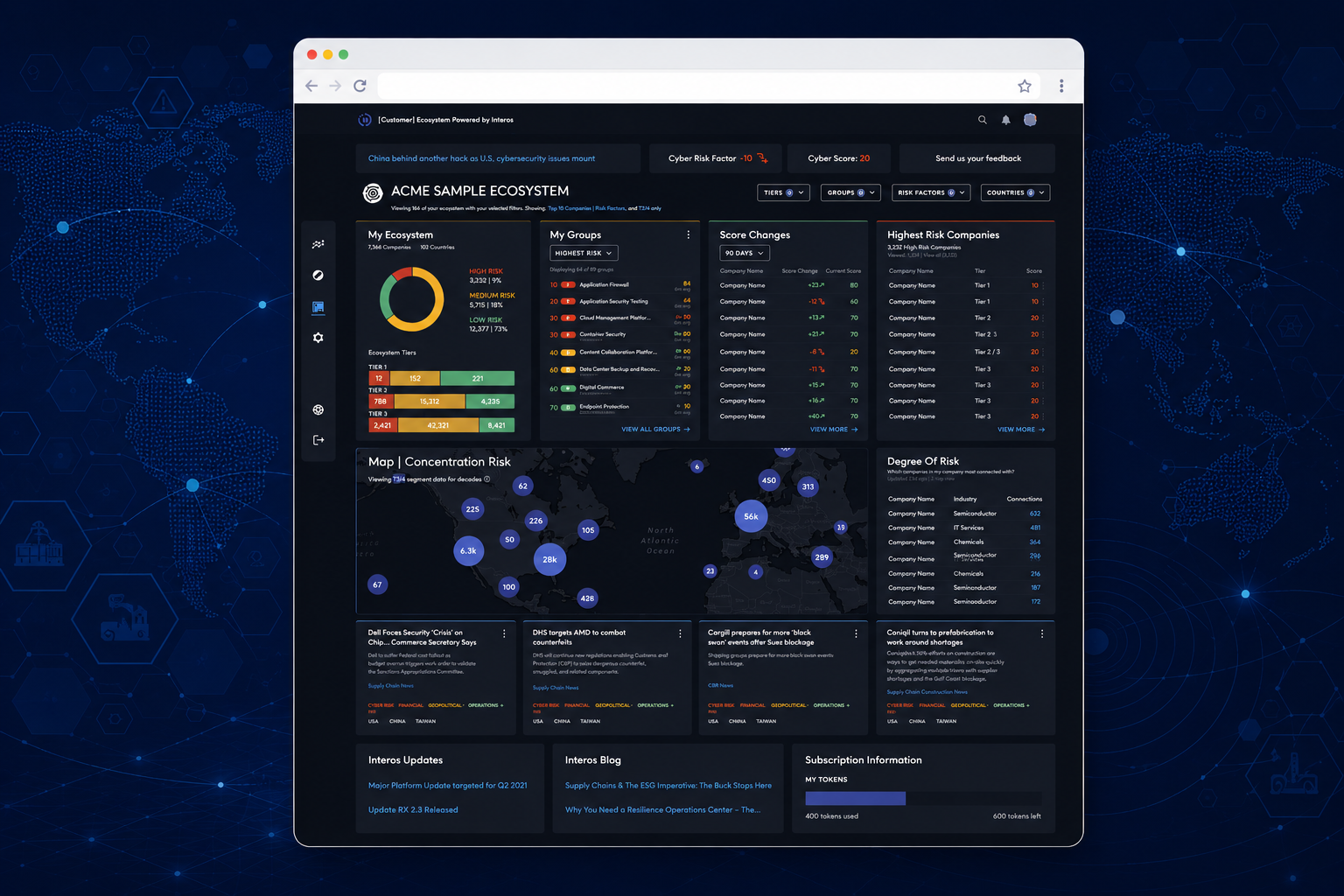
The new platform needed to do the opposite: condense complex datasets into meaningful aggregates, provide continuous monitoring through events and risk score changes, and give users clear exploration paths from a high-level overview down into the details that matter. I joined Interos as a consultant through Neudesic in early 2021, embedded in their product team.
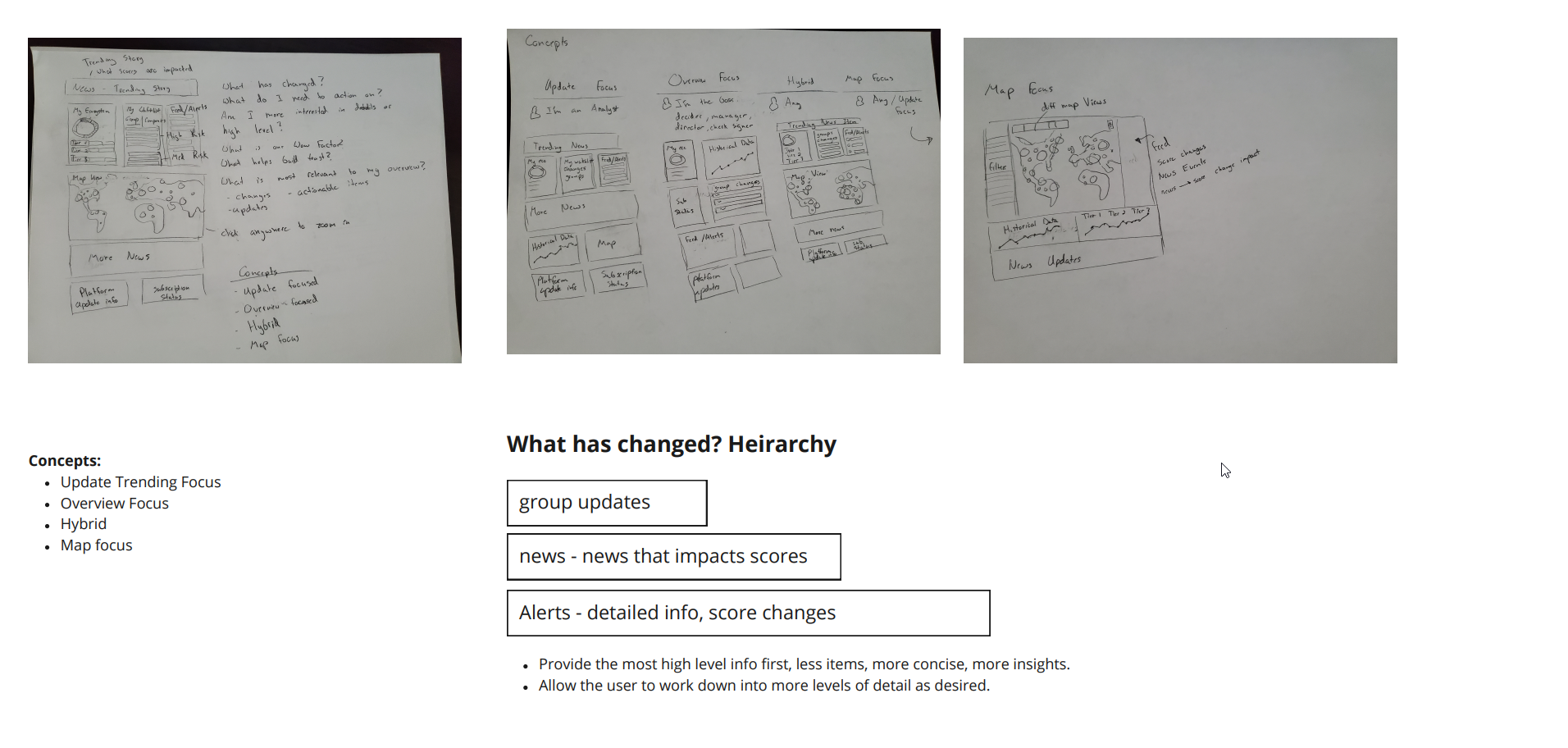
All three user types needed the same platform to work differently for them — executives wanted a birds-eye view, analysts needed to drill deep, managers needed actionable monitoring. Designing for that range without fragmenting the experience was the core challenge.
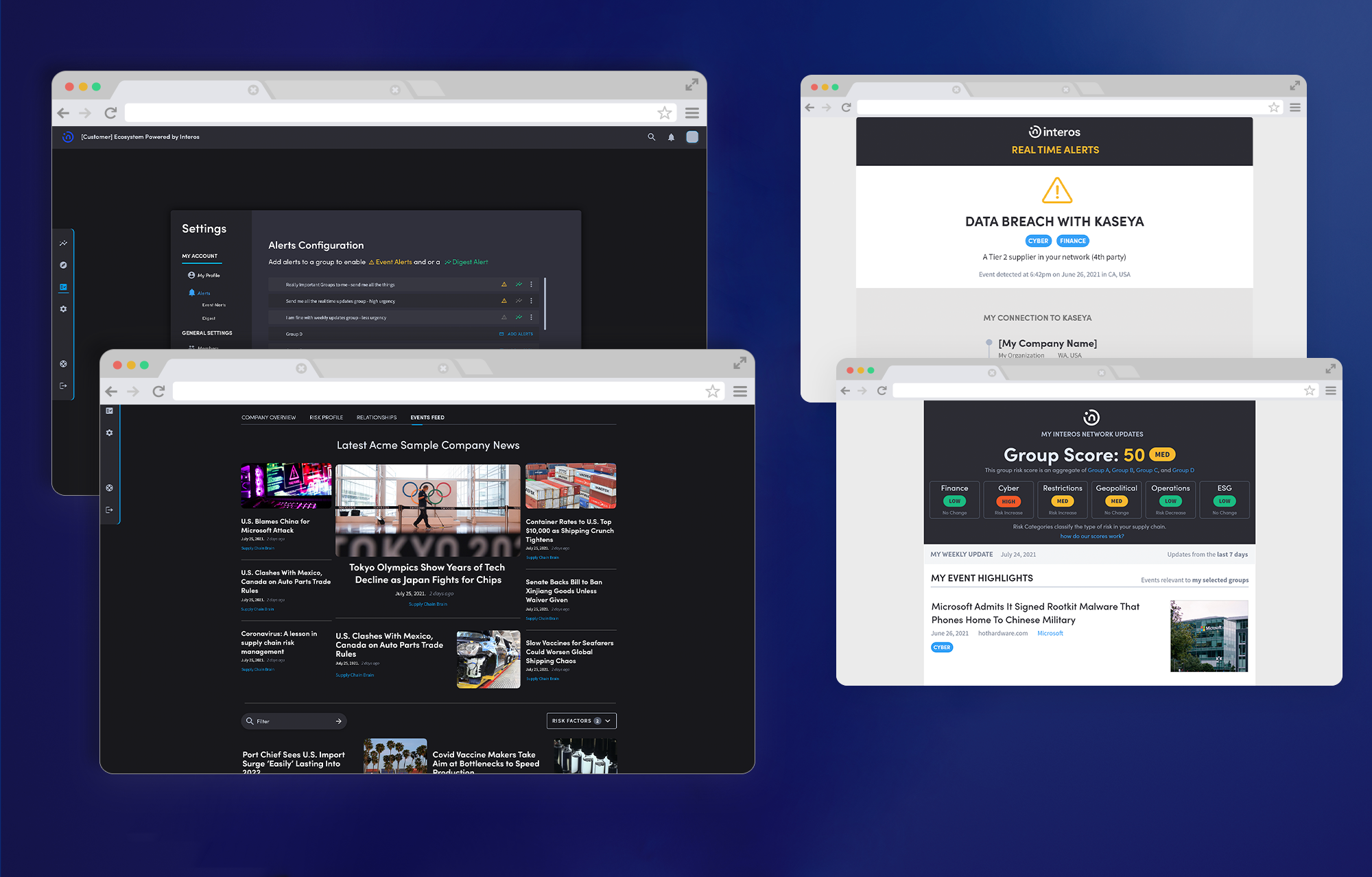
Over 18 months I led UX across five distinct workstreams — embedded in agile sprints alongside PMs, engineers, and Interos's internal design team. The three flagship features were the platform homescreen, the company profile, and the events/alerts system.
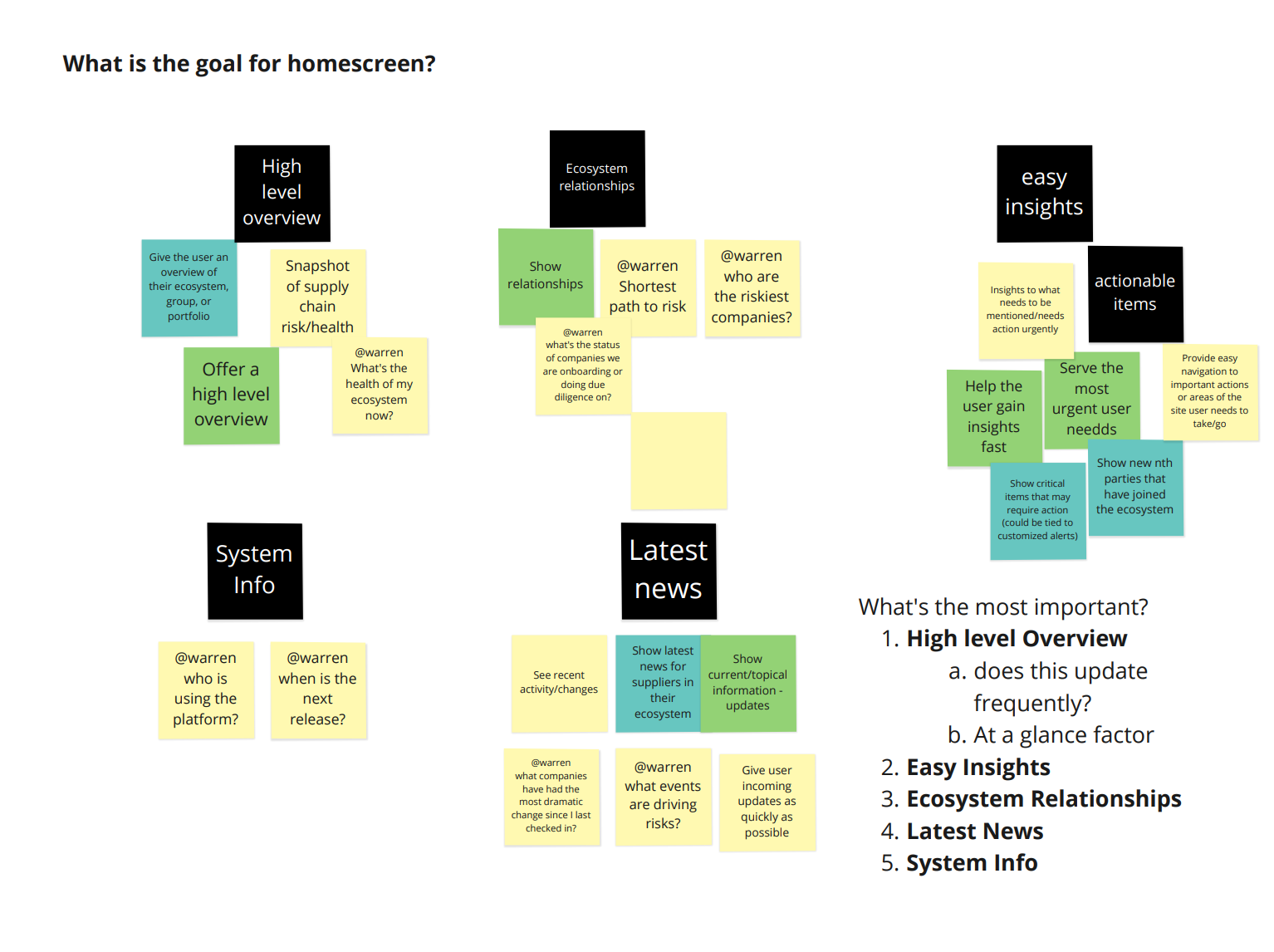
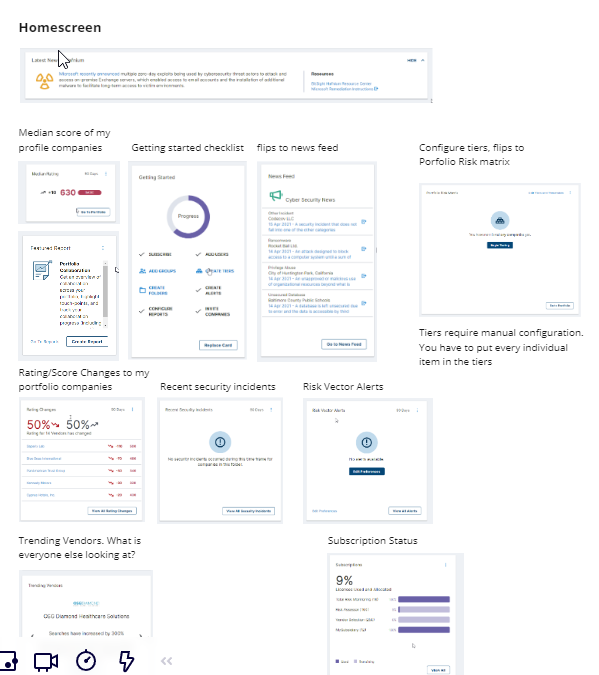
The homescreen is the most valuable real estate in any platform — it sets the mental model for everything else. The legacy homescreen was an overwhelming data dump. The redesign started with one question: what does a user need to know within 30 seconds of logging in? The answer shaped every design decision from layout to information hierarchy.
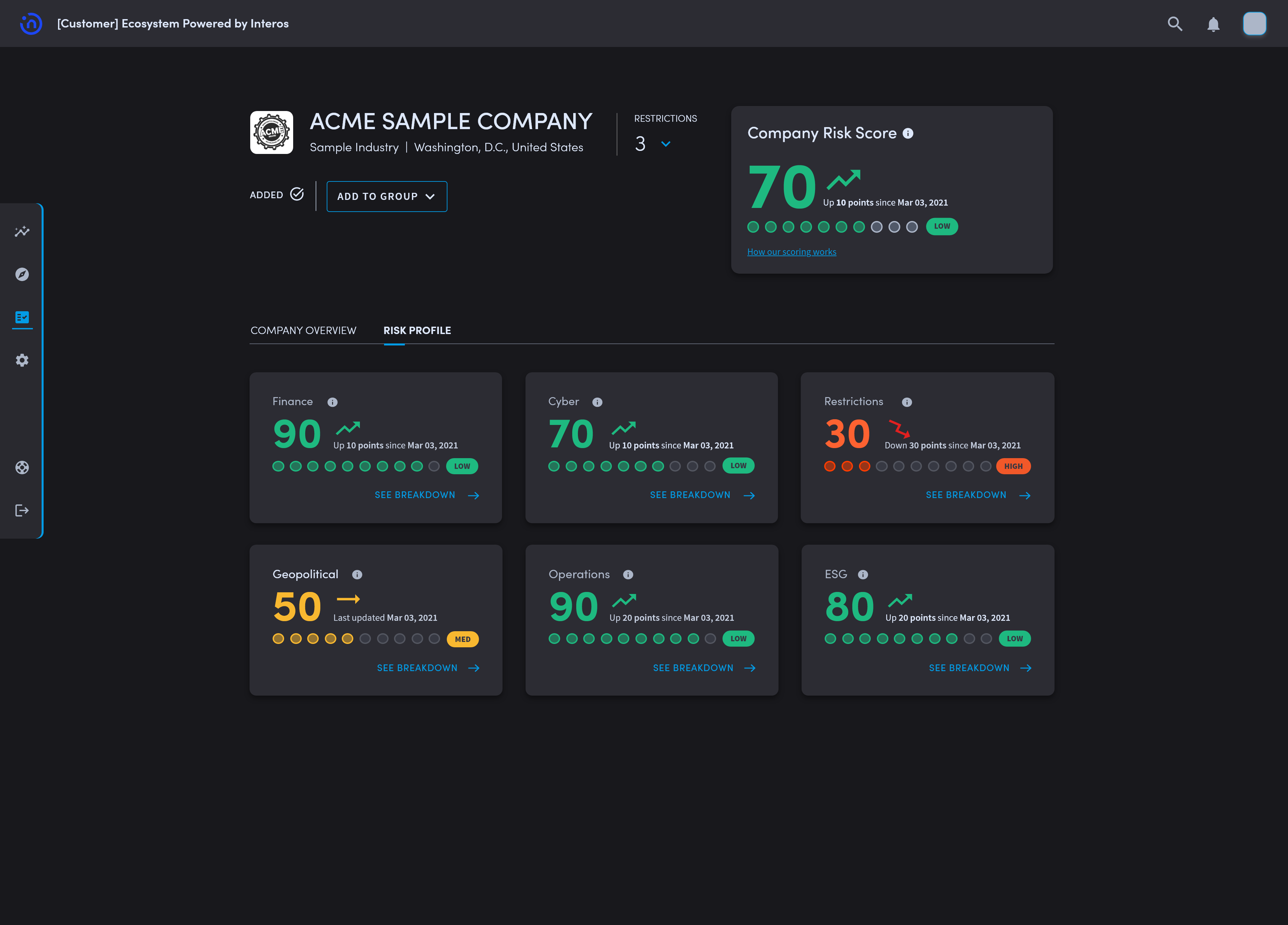
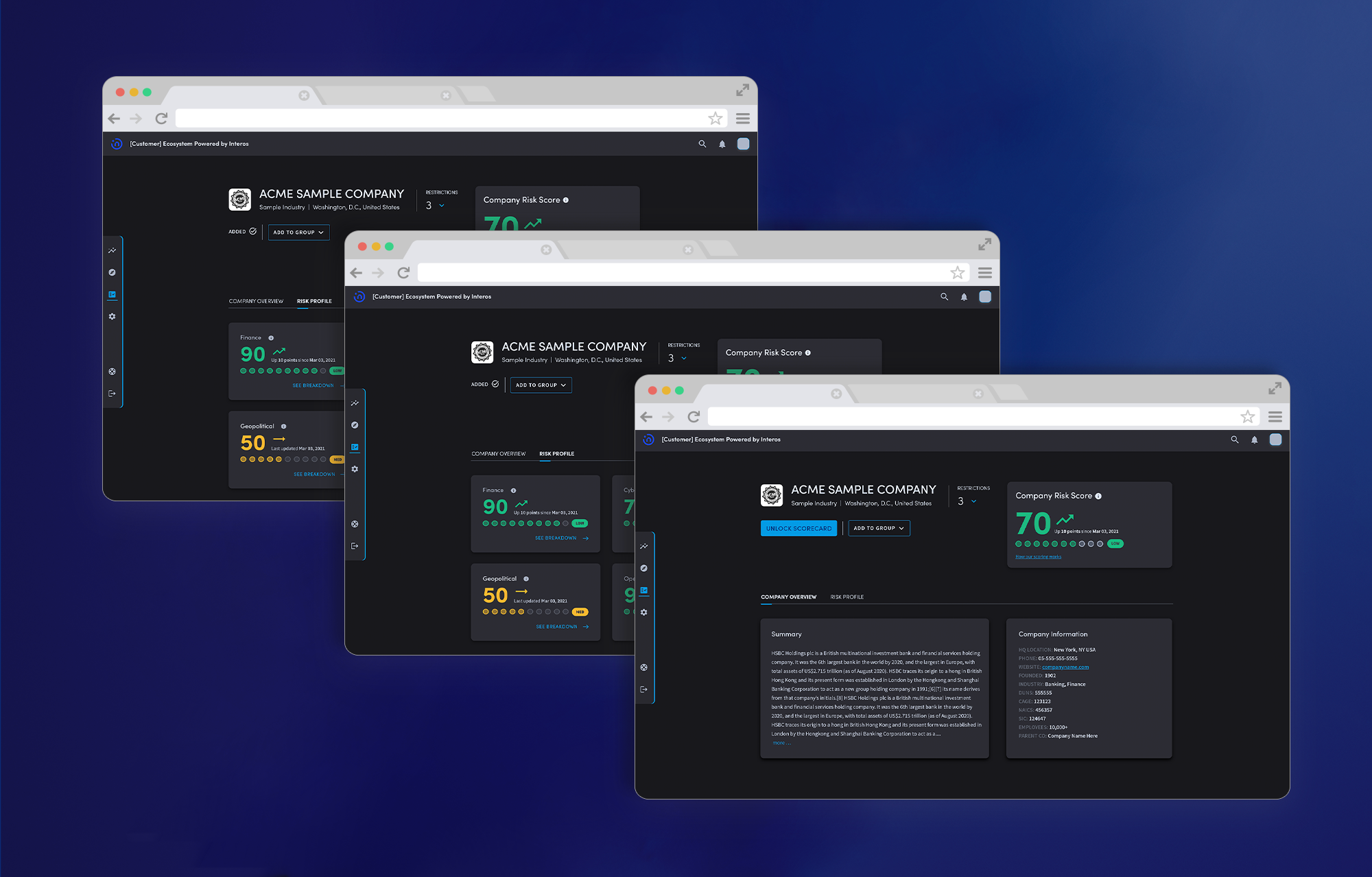
I joined the company profile midway through development. The existing design had poor contrast, inconsistent hierarchy, and wasn't following dark design best practices — text was hard to read, interactive elements weren't distinguishable, and the risk score data didn't breathe. I collaborated with a junior designer on the east coast in a tag-team arrangement — when he logged off, I took over.
The redesign established a proper dark UI system: layered backgrounds, consistent elevation, and a clear typographic hierarchy that made the risk scores legible and actionable.
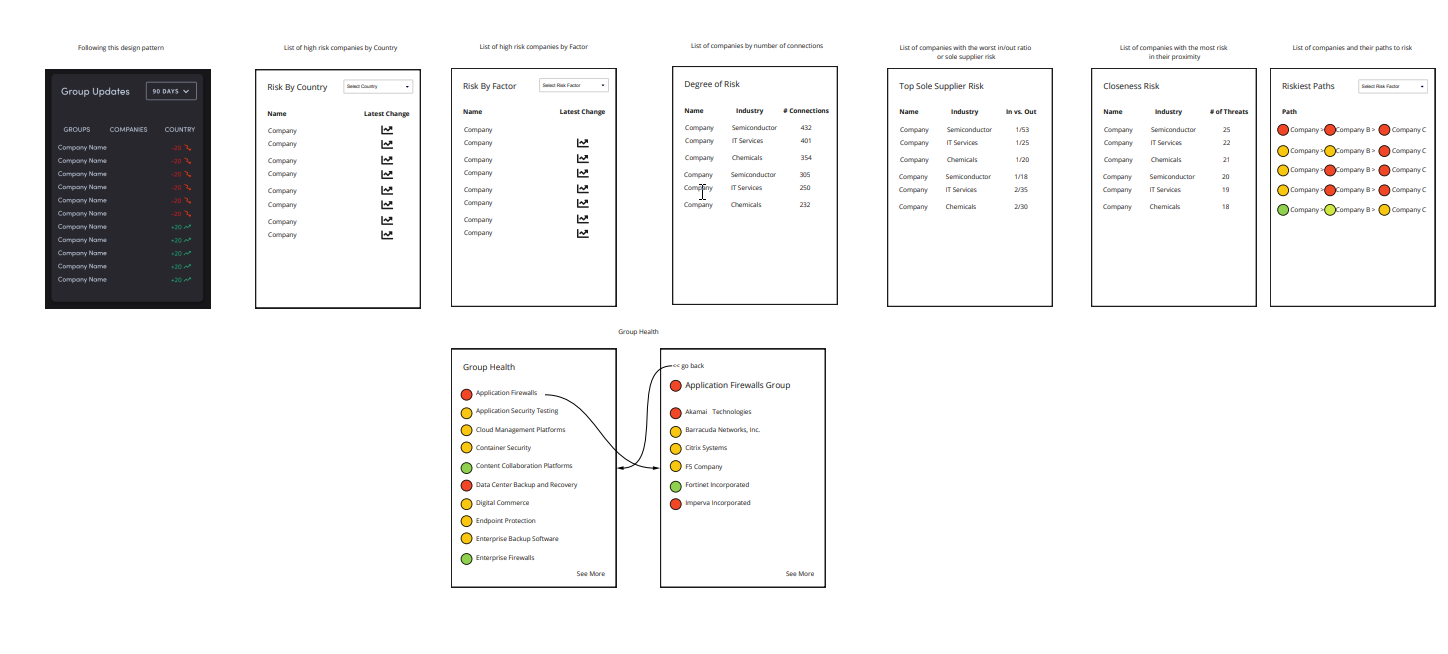
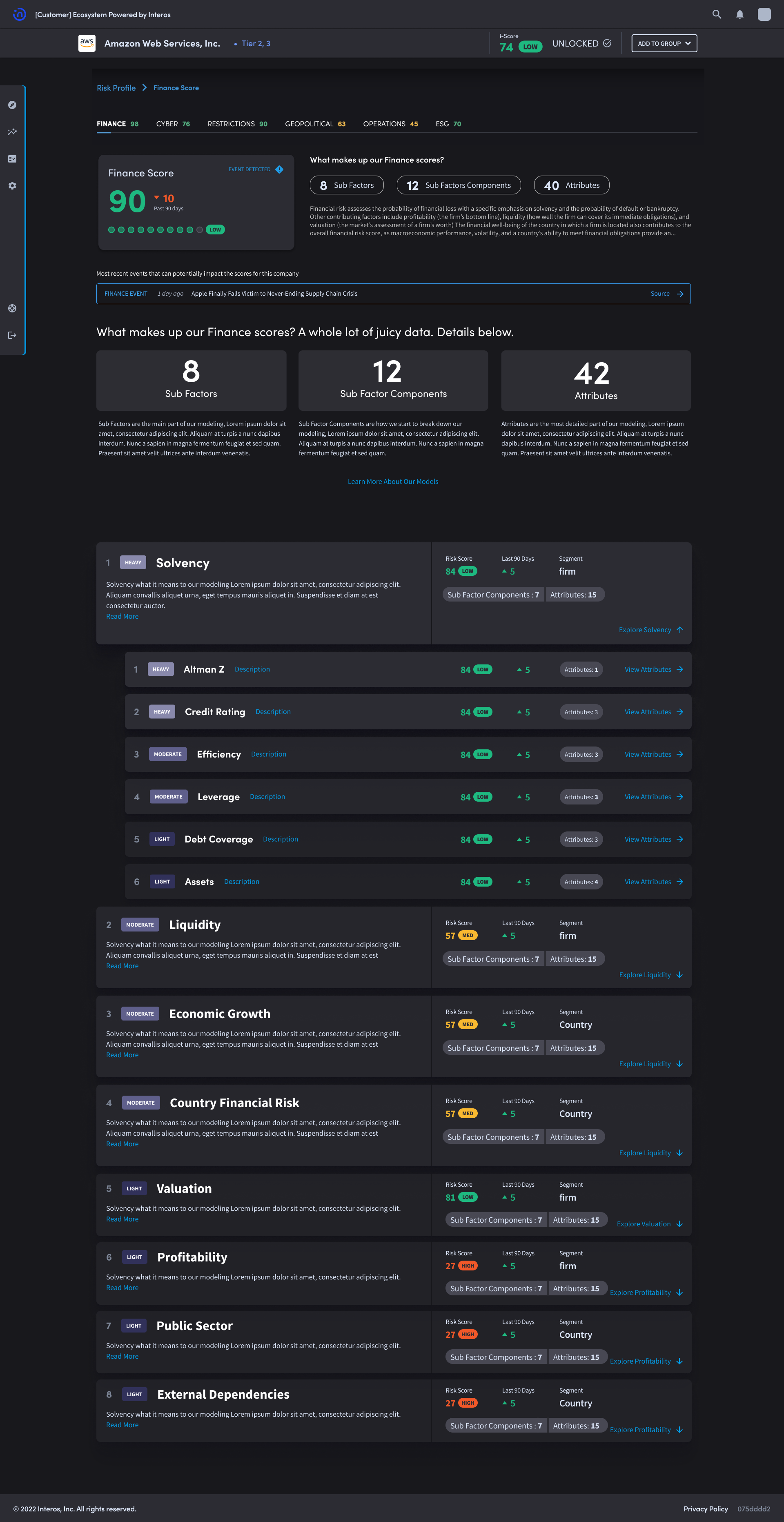
In the previous version, users had just a list of attributes — essentially data points. No context, no narrative. The redesign used progressive disclosure: show the user what they need to understand their current situation, let them drill down from there.
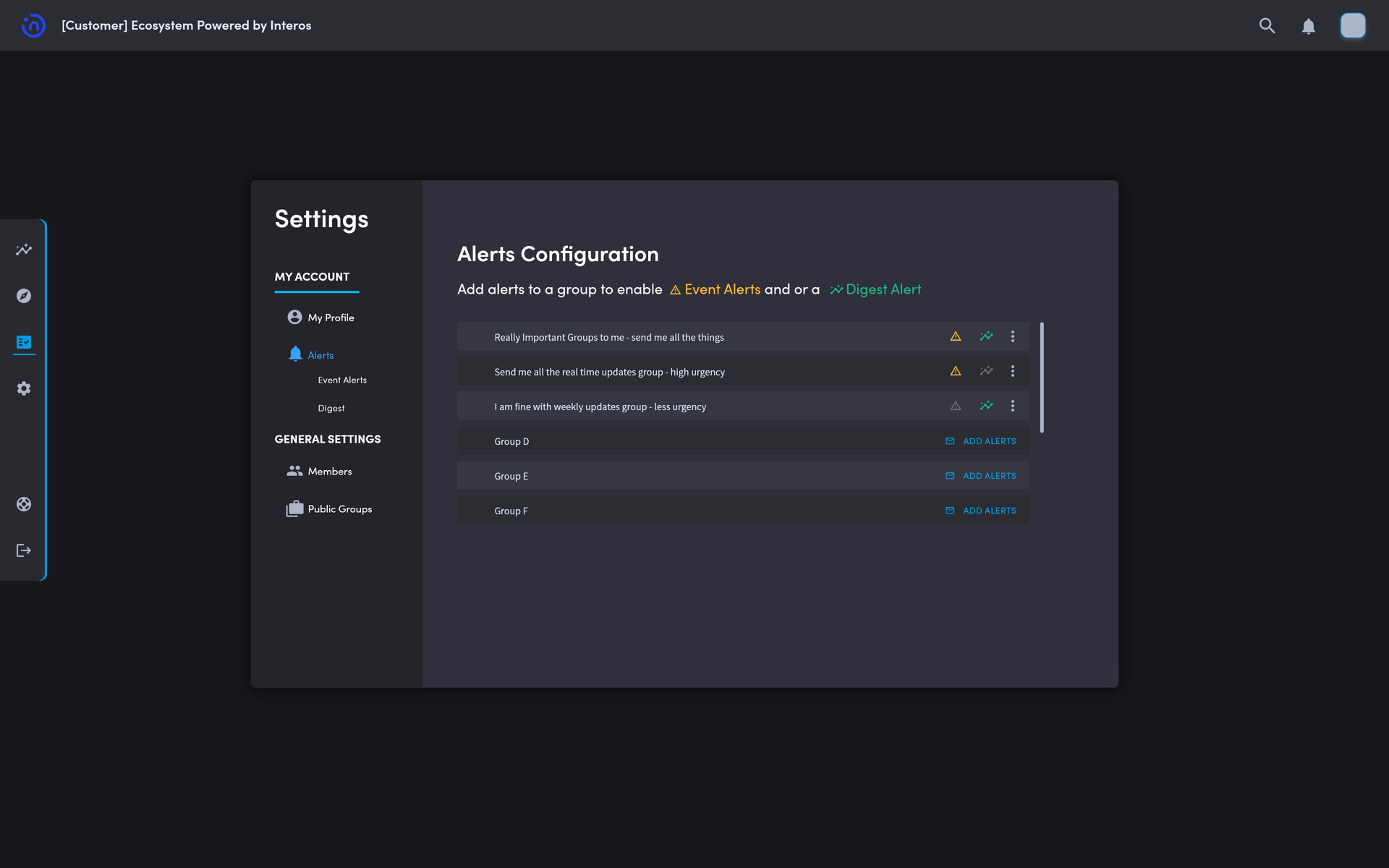
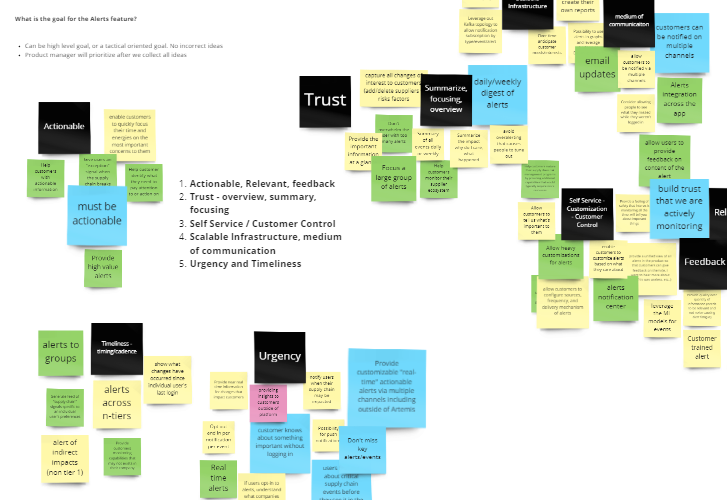
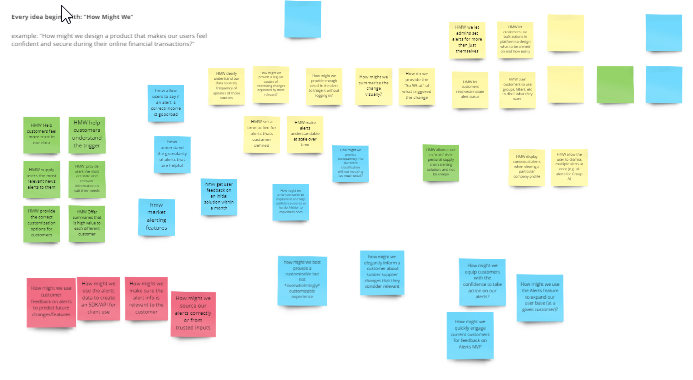
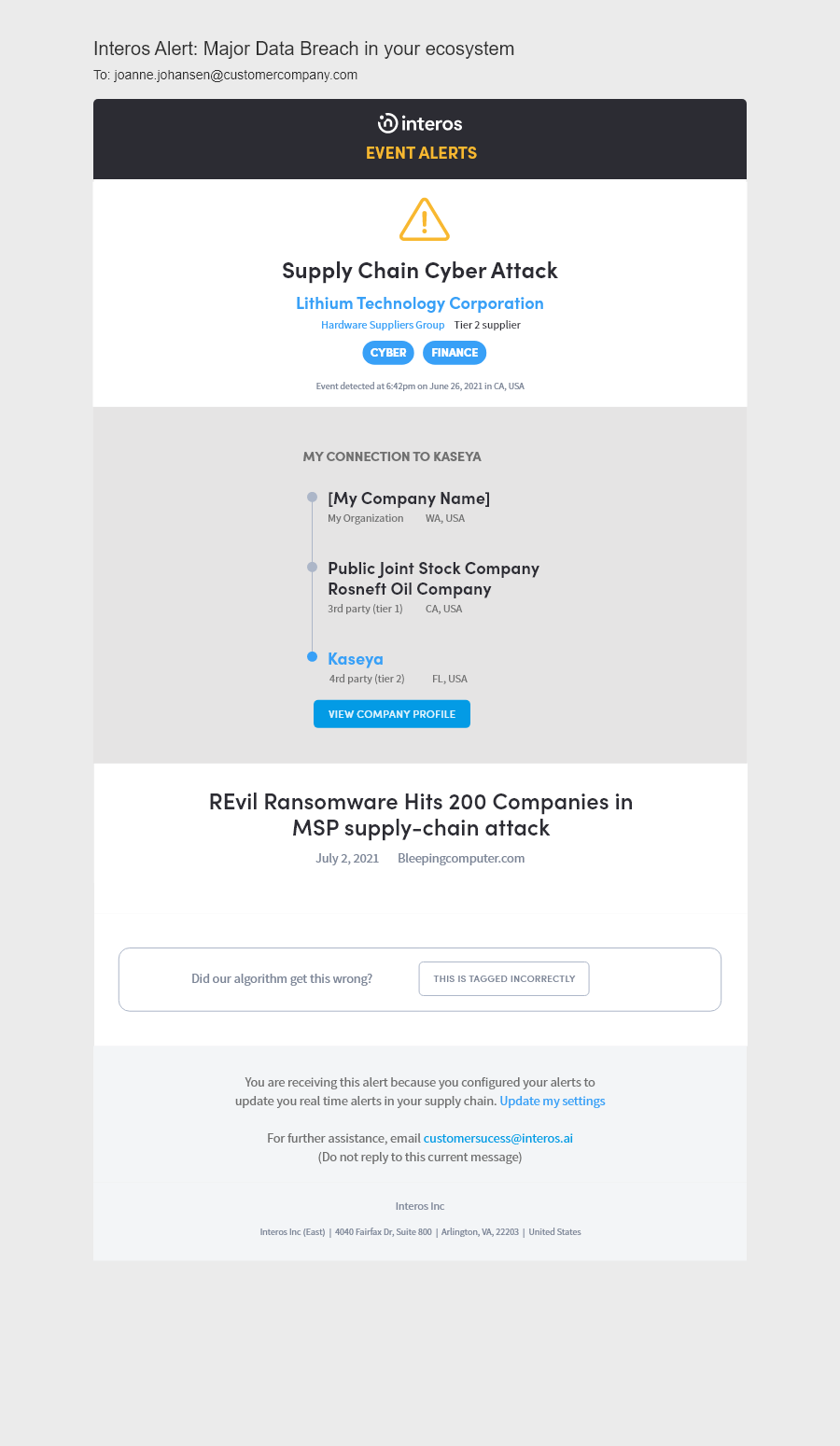
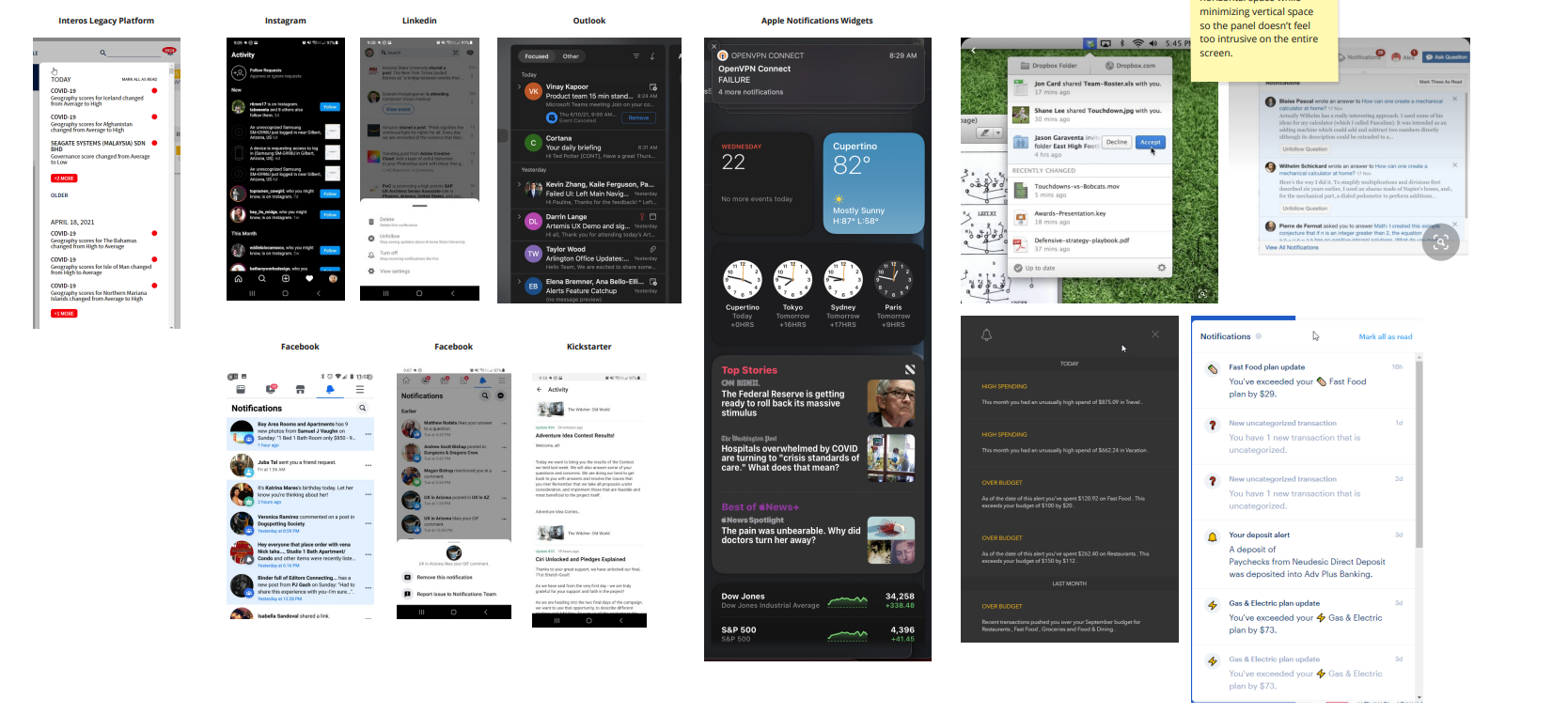
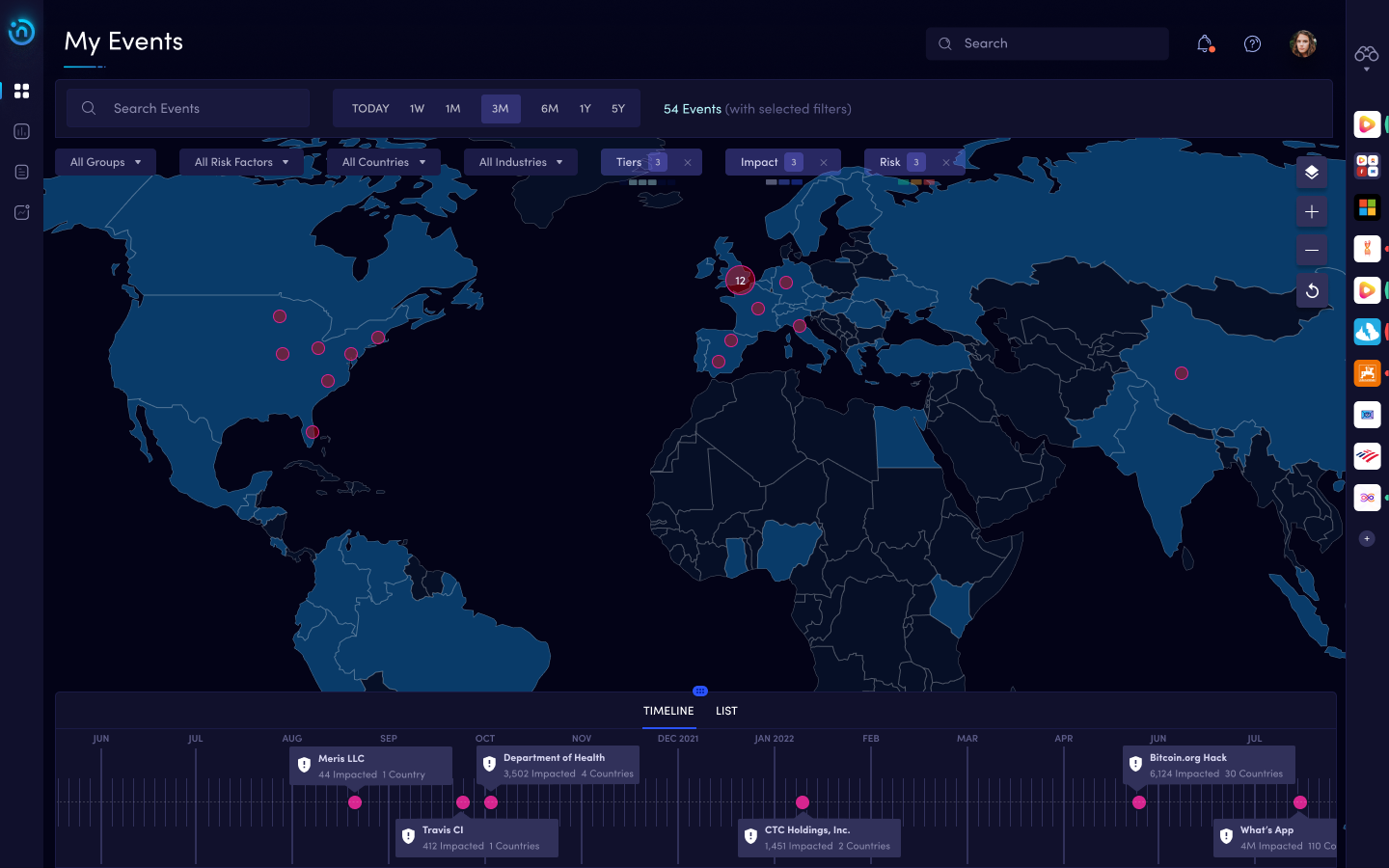
— Design principle, Interos Company ProfileSupply chain risk doesn't wait for you to log in. The alerts system was designed to keep users aware of critical changes — a Tier 2 supplier breached by ransomware, a country hit by sanctions — through in-app alerts, an events feed, and a branded email digest. The challenge was signal-to-noise: for large supply chains, the volume of events could reach into the hundreds per day. The design had to be ruthlessly prioritized.
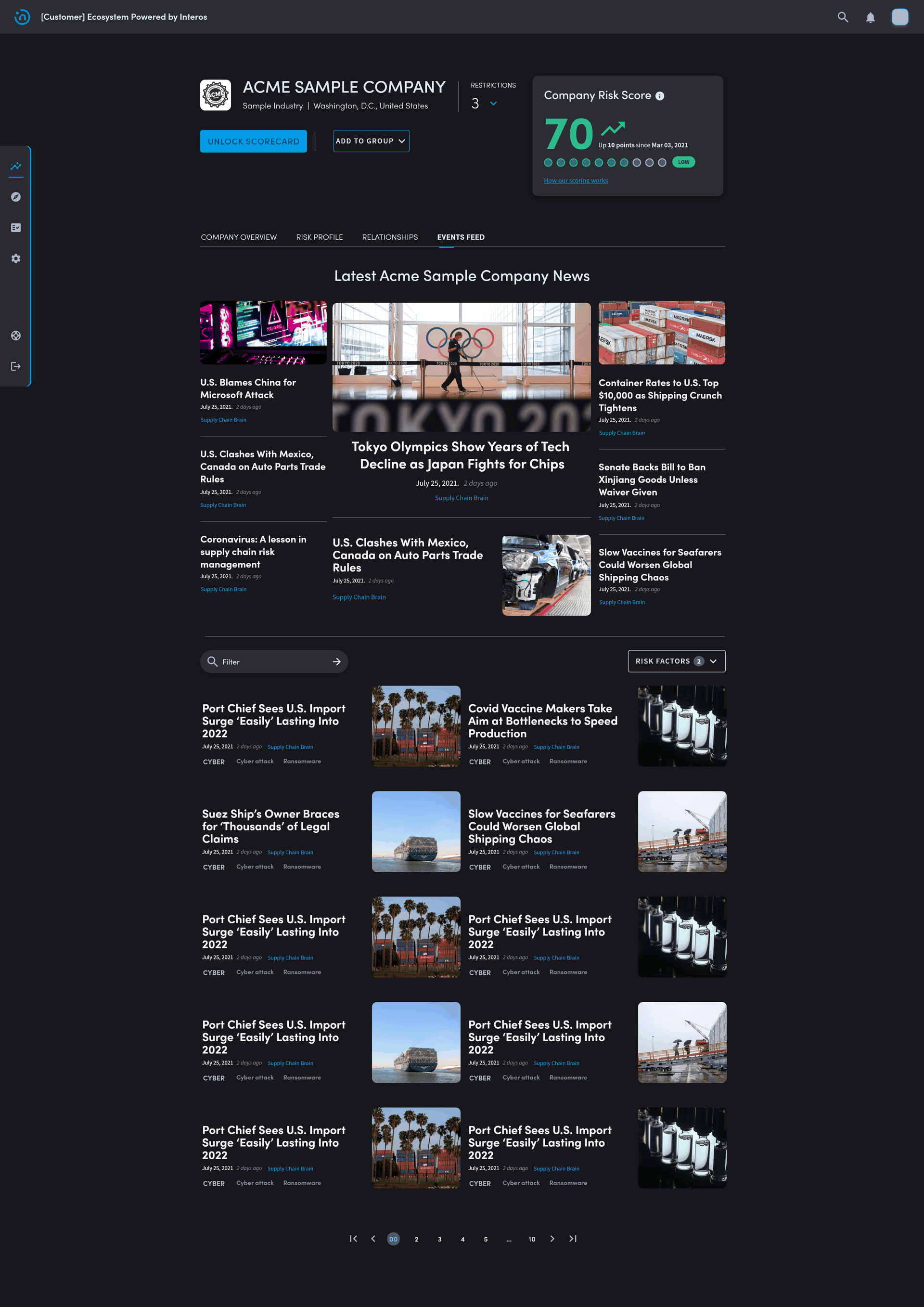
A third-party company had produced designs for the events timeline — a view showing a chronological history of supply chain events across your ecosystem. The designs were visually complex and hard to parse. My task: simplify elements, fix the visual hierarchy so filters were prominent, and streamline the timeline to surface the most important information.
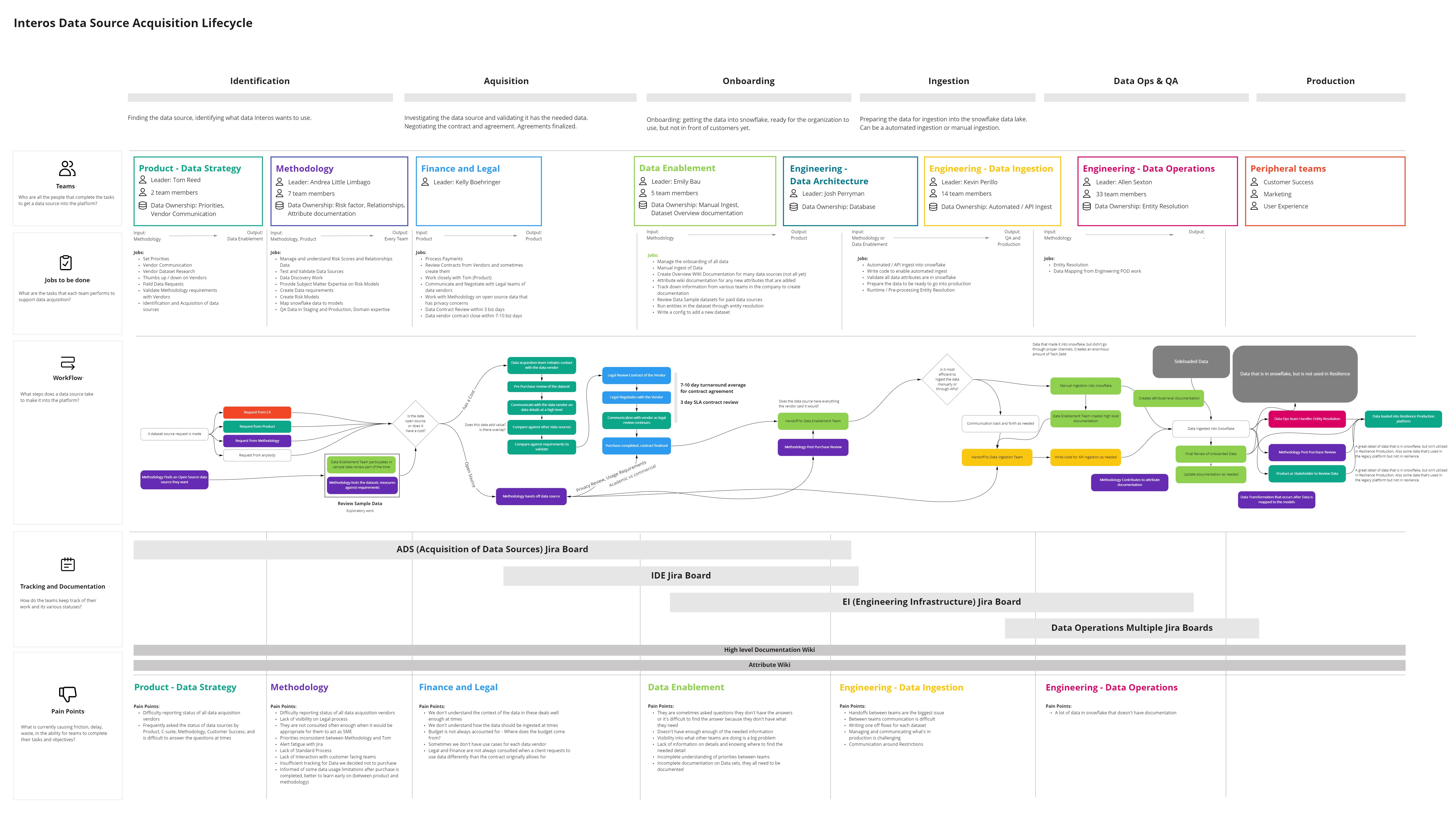
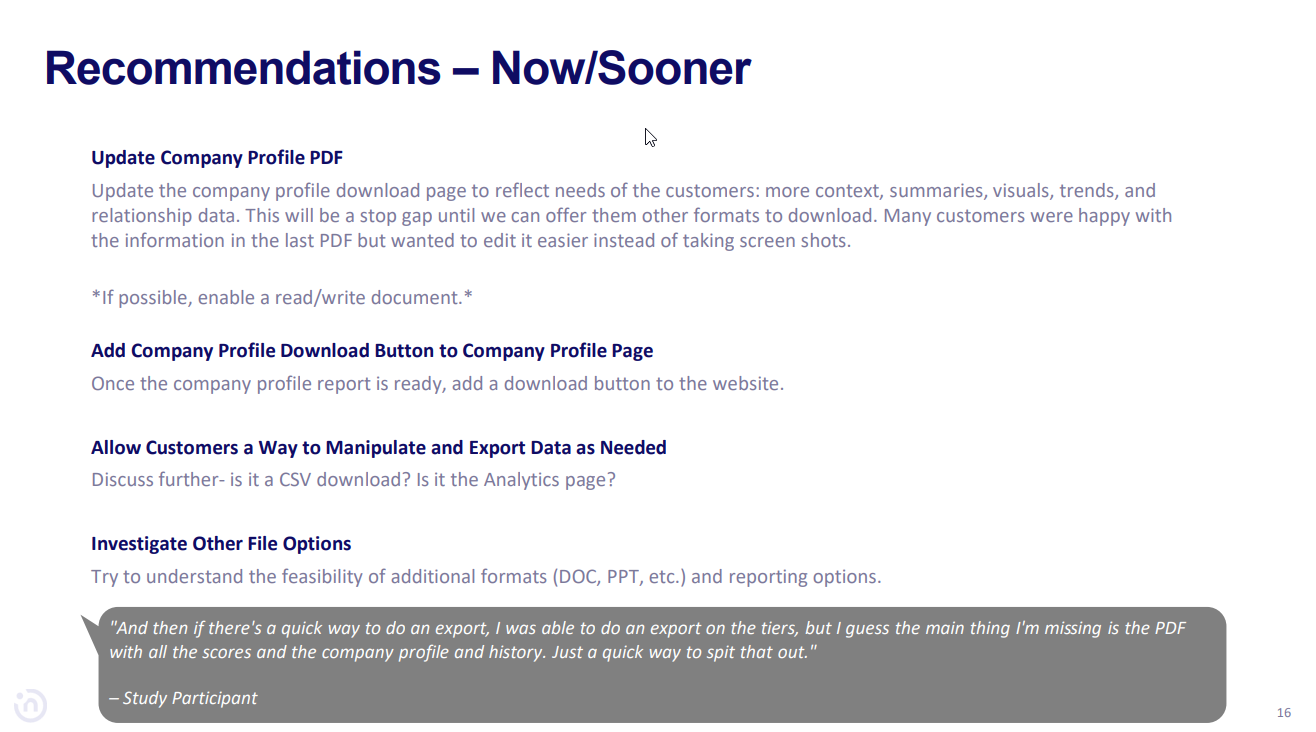
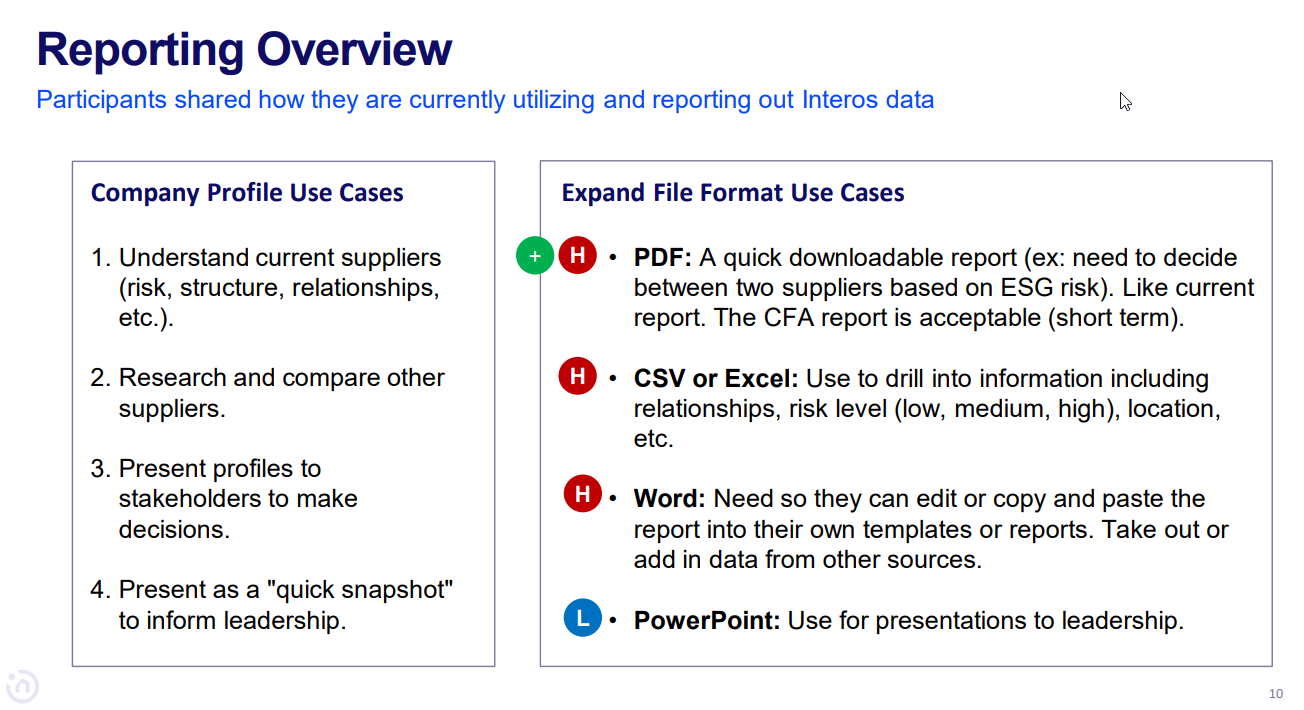
Alongside the feature work, I led a one-month research engagement to address a critical internal problem: Interos had no single source of truth for understanding which data sources they'd purchased, their status, or who owned what. I interviewed every department head across the data acquisition lifecycle — identifying all the teams involved, mapping the process end-to-end across every Jira board it touched, gathering pain points, and delivering recommendations in good/better/best format.
Interos had grown rapidly — adding over 200 employees in two years — and the process hadn't kept up. Keeping 5–10 product pods aligned without a formal design process meant a lot of coordination overhead. Design decisions that should have taken a day sometimes took a week to get in front of the right people.
Engineering estimations were largely done by the CTO, with minimal input from the development team. Communication between engineering and UX was poor when I joined. Part of my value was bridging that gap — being specific enough in handoffs that ambiguity didn't become a blocker downstream.
Interos taught me what it looks like to do UX inside a fast-growing startup that's outpacing its own process. The product was ambitious, the team was smart, and the design challenges were genuinely hard — but the infrastructure to support good design (clear requirements, stable handoffs, design review rituals) was still being built in real time.
The most valuable skill I developed here was designing for data density — finding the right level of abstraction for complex enterprise data so it becomes legible without losing fidelity. Supply chain risk data is inherently complex; the job is to give it just enough structure that users can act on it.
If I were starting over, I'd push harder earlier to establish a shared design system. Across five workstreams and multiple collaborators, the lack of a unified component library created inconsistency that we spent time reconciling rather than eliminating.